
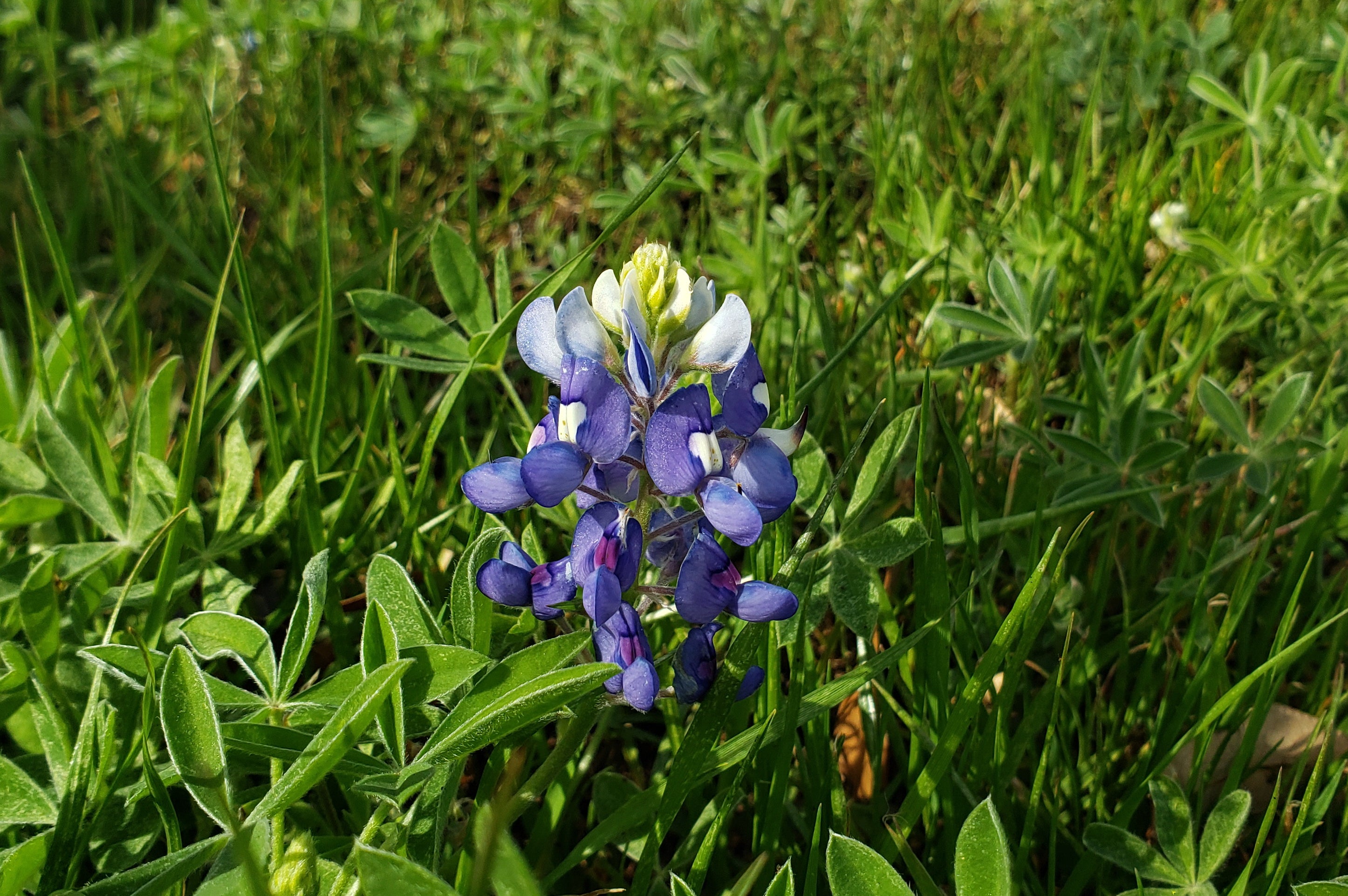
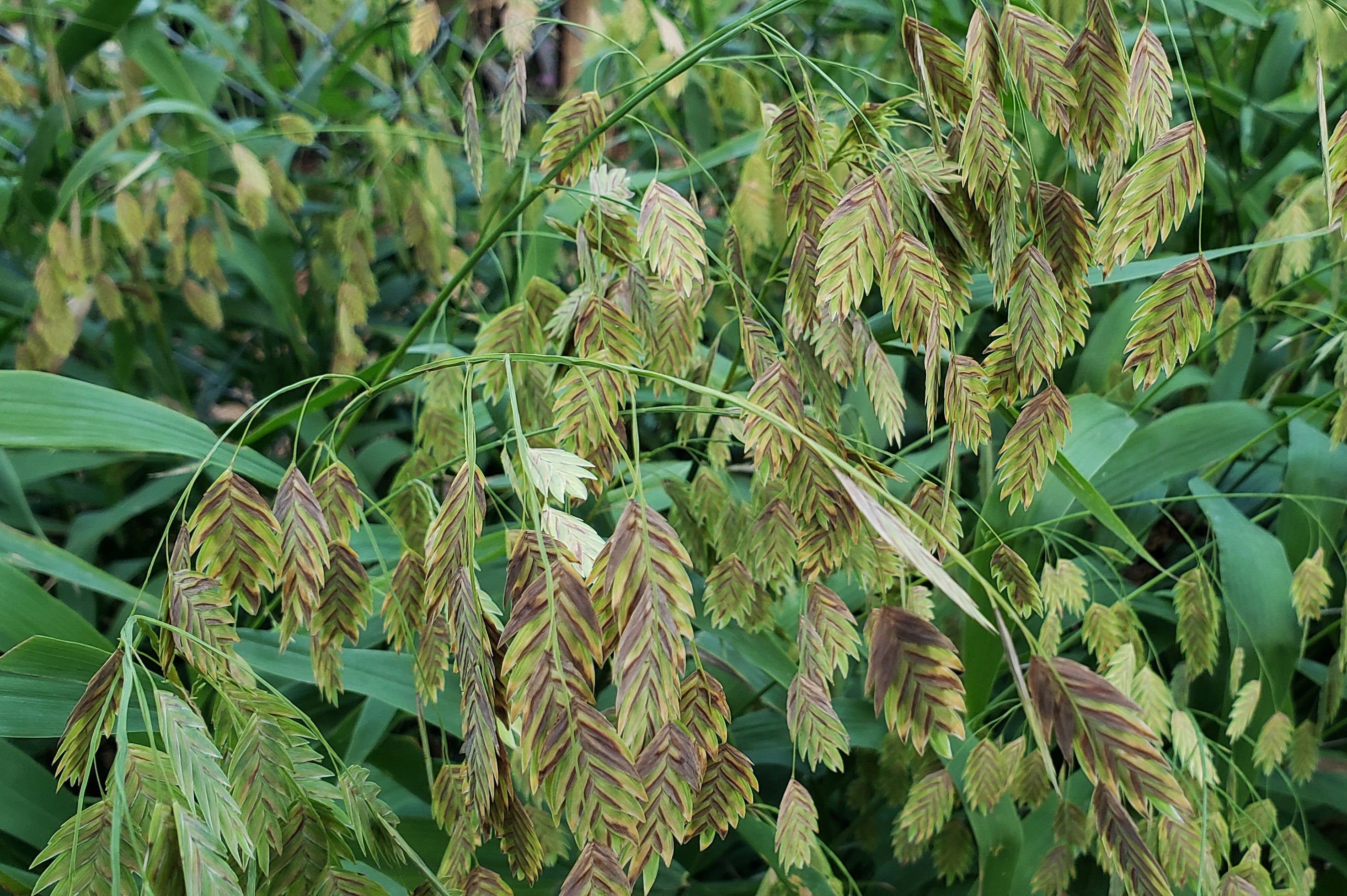
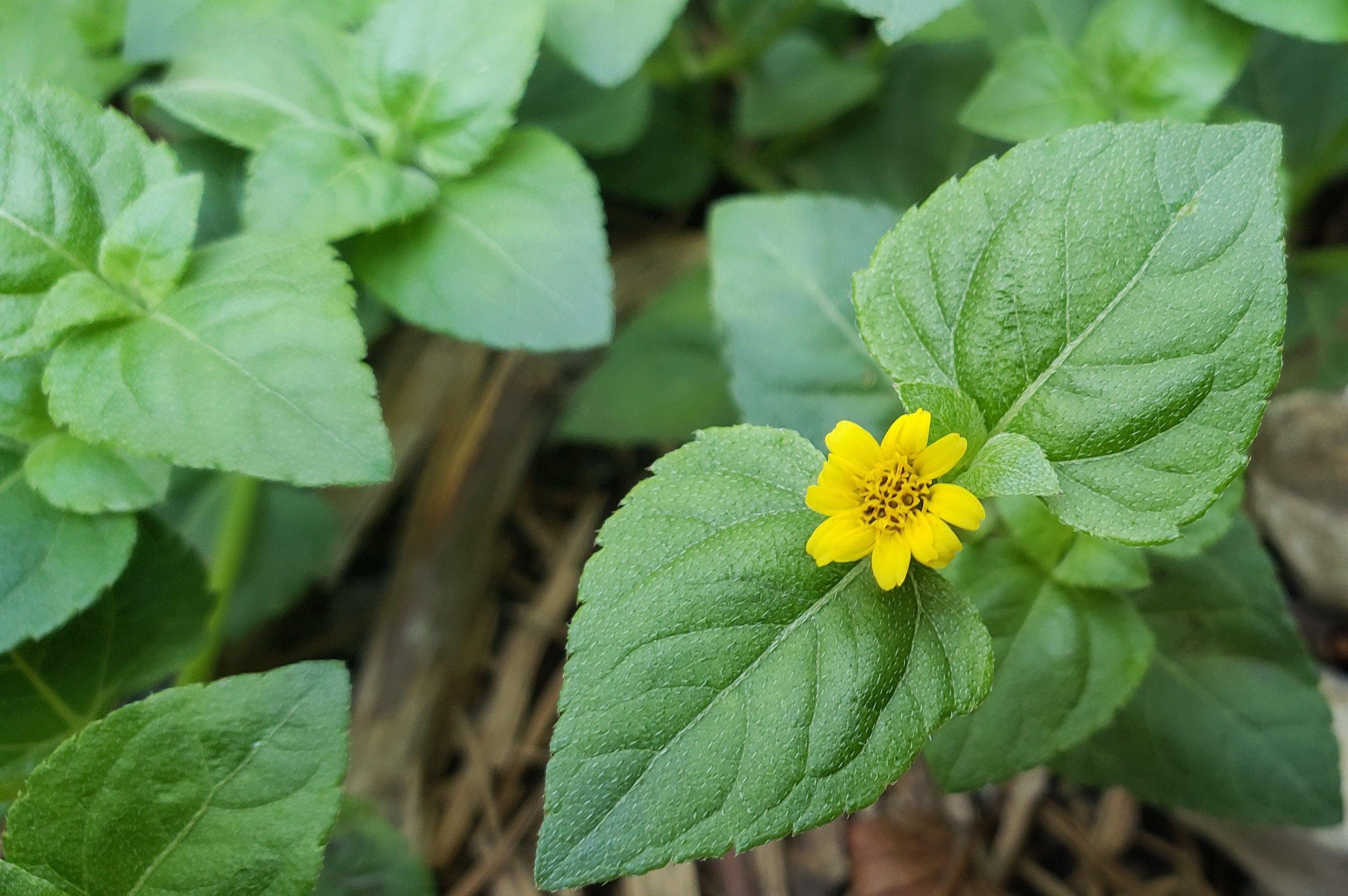

I knew the perennials and grasses would take some time to fill, so the plan for the first year was to fill all the open spaces with annuals. 

Annuals grow and cover spaces quickly. It makes them perfect as filler plants for newly planted bed. I was aiming for dense plant coverage which I find helpful in many ways. It means that there are few weeds. It means that you do not have to mulch as the plants shade the ground and create living mulch. It also means that the landscaping becomes resilient. If something dies or does not do well, you hardly notice as other plants fill in the space. Yes, as with any space, you need to edit it periodically to be what you intended to be - but that's the case with any kind of landscaping.  

First, we had a taste of winter. Snow is a good insulator, so nothing suffered.  I look fondly at the photo of the snowy landscape. We don't get snow in North Texas often- to me it is a treat.

And then spring arrived... And things grew quickly and furiously. In mid March (photo below) the ground was mostly covered already.

And growth continued rapidly. The two photos below were taken less than a month apart (first one on April 9th, the second one on May 1st, 2024).


I really enjoyed the explosion of color. It was exuberant and unashamed. Just color, for months on end. The spring was quite wet and mild that year and plants grew tall and bloomed for a long time. (Photo below taken on May 12th)


Eventually, as the hot and dry weather arrived, some spring flowering annuals started to go to seed and have way some summer loving plants. By mid June, a lot of the yellows were gone, and some purples and pinks arrived. Grasses started to make an appearance as well, adding the richness of texture and movement to the garden. The colors became more subdued but the landscape somehow looked richer due to the grasses. (Below photos were all taken in mid June)

The photo above shows the bed mid cleanup - I slowly pulled up spent annuals to allow the space for the grasses and perennials to fill in. And they did not disappoint.

By early July this was the effect...


It was so exciting to see it change and evolve. One of the best things about native gardens is that they forever change. There is always something to look forward to, something to learn from and something to observe. That first year was particularly dynamic. I got into a habit of doing a walk-through first thing when I got to the shop in the morning. It is a really good habit to have because you start to have a really good idea of what is going on in your garden and notice if anything is not doing well or needs something right away. You also notice all the exciting things - the wildlife that visits your garden, new blooms, new growth, things that go together particularly well (whether it as planned or a happy accident). The knowledge of your garden becomes intuitive and any maintenance does not seem a chore, but rather part of a daily routine.

By the time fall was near things began to change again. By mid September Lindheimer Senna (Senna lindheimeriana) was putting on a show and grasses where still going strong. Azure Blue Sage (Salvia azurea) added beautiful pops of blue to the landscape. And by October Rough Gayfeather (Liatris aspera) added a strong pop of purple.


January 16, 2026 — Anna Hurst

Leave a comment

Please note: comments must be approved before they are published.